FluxGrowth is reader-supported. Some links in our guides are affiliate links — if you buy through one we may earn a commission, at no extra cost to you. It never changes which tools we recommend. How we test tools.
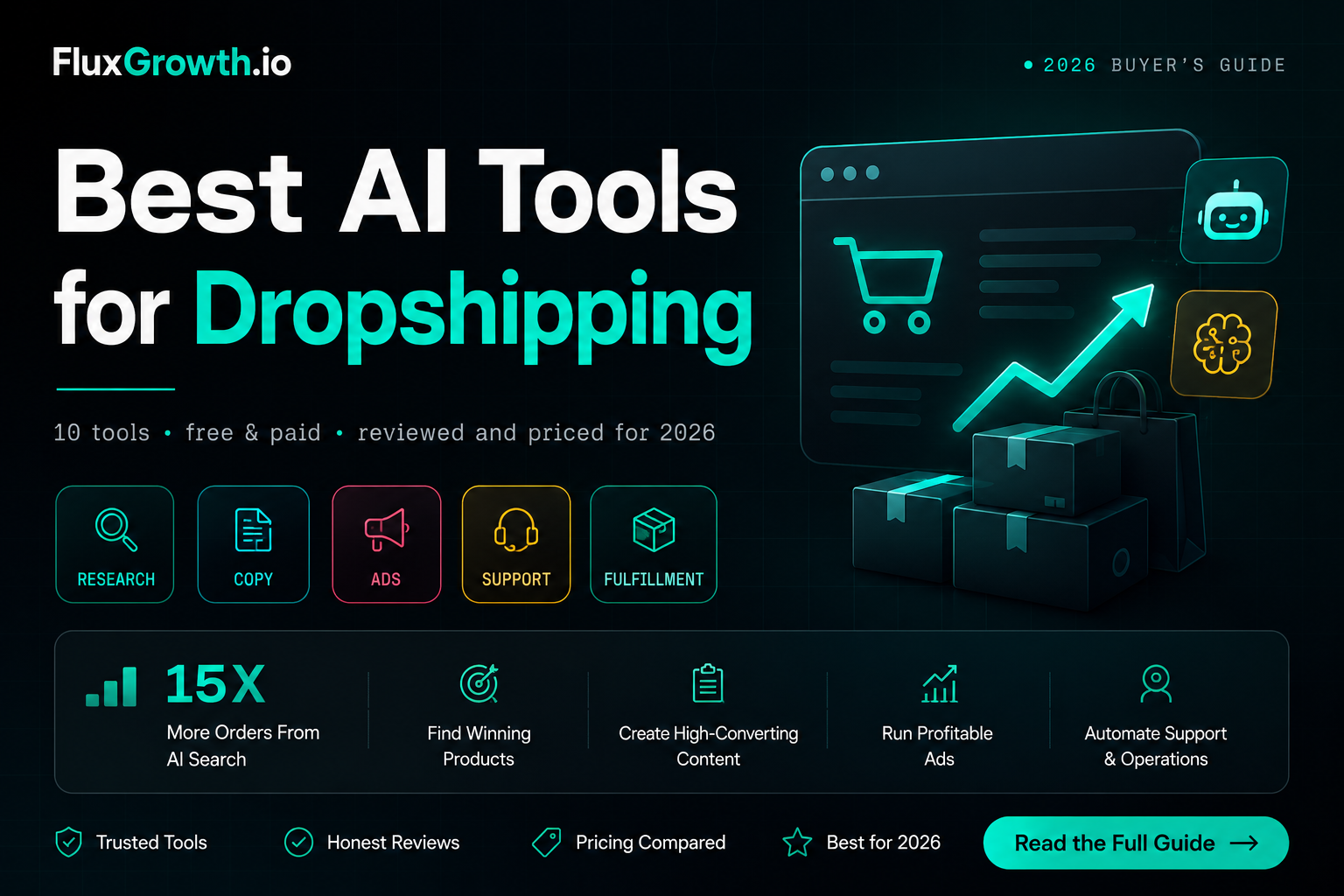
Your customer just found your product without ever visiting Google. They asked ChatGPT for “a good silicone phone grip under $20,” and the AI handed them three options, one of which was a Shopify store running Agentic Storefronts. That’s not a 2030 prediction. Shopify says orders coming from AI searches jumped 15x between January 2025 and January 2026.
This guide is part of our AI Automation hub – everything we have published on automating a small business with AI, in one place.
So the question isn’t whether AI tools for dropshipping are worth it anymore. It’s which ones, and where they actually move a number on your dashboard.
Here’s the trap most sellers fall into: they stack up eight subscriptions, burn $400 a month, and still can’t tell you which tool found their last winning product. You don’t need eight tools. You need the right one for the bottleneck you actually have right now: research, copy, creative, support, or fulfillment. This guide breaks down 10 tools (free and paid), what each one really does, what it costs in June 2026, and who should skip it.
What AI Tools for Dropshipping Actually Do?
Strip away the marketing and AI in a dropshipping store doing five jobs.
It finds products by scanning live ad data and competitor stores so you’re not guessing. It writes product descriptions, ad copy, email sequences in seconds instead of hours. It generates creativity, turning a single product photo into scroll-stopping ad variations. It answers customers around the clock through chat. And it handles the boring backend: price monitoring, stock syncing, order routing.
What AI doesn’t do is run your business. It suggests a product; it can’t tell you if your supplier will ship on time or if the margin survives a 7% return rate. So treat every tool below as a faster intern, not an autopilot. The seller still makes the calls.
Why Do Dropshippers Lean on AI in 2026?
The dropshipping market is heading toward roughly $500 billion by 2027, according to Doba’s 2026 analysis and the gap between sellers who use AI well and those who don’t keeps widening. Here’s where that edge shows up.
Faster product research
Manual research used to mean hours scrolling AliExpress and guessing. Now an ad-spy tool like Minea pulls live data from Facebook, TikTok, and Pinterest so you can see what’s already selling before you spend a dollar on ads. Twenty minutes of competitor analysis replaces an afternoon of scrolling.
Content that doesn’t take all weekend
Writing 100 product descriptions by hand is a special kind of misery. Shopify’s own merchant data suggests Shopify Magic saves store owners around 346 hours and $8,725 a year across descriptions, emails, and support replies. That’s real time back.
Better ad performance
Tools like AdCreative.ai generate dozens of ad variations trained on conversion data, so you test more angles without hiring a designer. More tests, faster, usually means a lower cost per winning creative.
Support that scales while you sleep
AI chat handles the “where’s my order?” flood so you’re not answering the same question 40 times a day. The catch and we’ll come back to this is that over-automating support is one of the fastest ways to lose a refund dispute. So use it for triage, not for the angry emails.
How to Choose the Best AI Tool for Dropshipping?
Five filters matter. Everything else is noise.
Ease of use. If a tool takes a week to learn, you’ll cancel before it pays off. Look for a free trial you can actually test in an afternoon.
Shopify and ecommerce fit. Native one-click import beats copy-paste every time. Sell The Trend, Minea, and Predis.ai all push products or content straight into Shopify; some “integrations” are really just a manual export in disguise.
Automation depth. A research tool that only finds products is fine. A tool that finds, imports, prices, and fulfills like AutoDS replaces three subscriptions. Count the apps it lets you cancel.
True cost, not sticker price. This is the big one. The $39 plan that locks video behind a $249 tier isn’t a $39 plan. Read the fine print on credits, downloads, and trial-to-paid conversions before you enter a card.
Support. When an order breaks at 11 p.m., you want a human or a fast chat, not a ticket that answers in three days.
The 10 Best AI Tools for Dropshipping in 2026
These aren’t ranked best-to-worst. Each one solves a specific job, and the order roughly follows how you’d build a store, find the product, write the words, make the ads, run the backend.
1. Sell The Trend
The closest thing to an all-in-one. Product research, a competitor “store intelligence” view, a video-ad creator, and order fulfillment live under one login, which is why beginners gravitate to it.
Key features: AI product discovery across AliExpress, Amazon, and CJdropshipping; a Chrome extension that overlays sales data while you browse; one-click Shopify import; video ad builder.
Pros and cons: It does a lot from a single dashboard, and the data visualizations are genuinely useful for spotting momentum. But you pay every month whether you launch or not and if you’re a “planner” who researches for weeks without testing, that recurring fee bleeds you dry.
Pricing: Plans now span Lite, Essential, Pro, and Pro+. Essential runs about $39.97/month and Pro about $99.97/month, with roughly 33% off annual billing and a 14-day trial that requires a card.
Best for: Beginners and intermediate sellers who want research, ads, and fulfillment in one place and will actually launch products.
2. AutoDS
If your bottleneck is the backend, this is the one. AutoDS automates product imports, price and stock monitoring, and order fulfillment across Shopify, eBay, TikTok Shop, and more.
Key features: Auto price/stock updates, automatic order fulfillment, AI title and description generation, a product-finding marketplace.
Pros and cons: It quietly replaces several manual apps, and the per-marketplace pricing means you only pay for where you sell. The catch is real, though: that $1 trial converts to a full annual charge if you don’t cancel in time DailyFulfill’s 2026 breakdown pegs the surprise hit at roughly $238 to $368, not the $26.90 you expected. Set a calendar reminder.
Pricing: Import, Starter, and Advanced tiers. Starter sits around $26.90/month on Shopify/eBay and Advanced around $39.90+, scaling with product volume; annual billing saves about 25%, with a 21-day money-back guarantee.
Best for: Sellers past the validation stage who are managing real order volume and want fulfillment on rails.
3. Minea
The ad-spy specialist. Where most tools only watch Facebook, Minea pulls creative data from Facebook, TikTok, Pinterest, Instagram, and Snapchat plus influencer posts most spy tools ignore.
Key features: Multi-platform ad library, a Shop Spy tool that reverse-engineers any Shopify store’s catalog, AI product discovery, and one-click import.
Pros and cons: The free tier (200 credits) lets you test real research before paying, which is rare in this category. On the downside, credits disappear fast once you get serious, and the jump to the Business tier is steep.
Pricing: Free plan, Starter around $49/month (closer to $34 on annual billing), Premium near $69/month, and a Business tier around $399/month for agencies.
Best for: Sellers who live and die by paid ads and want to validate demand before spending on traffic.
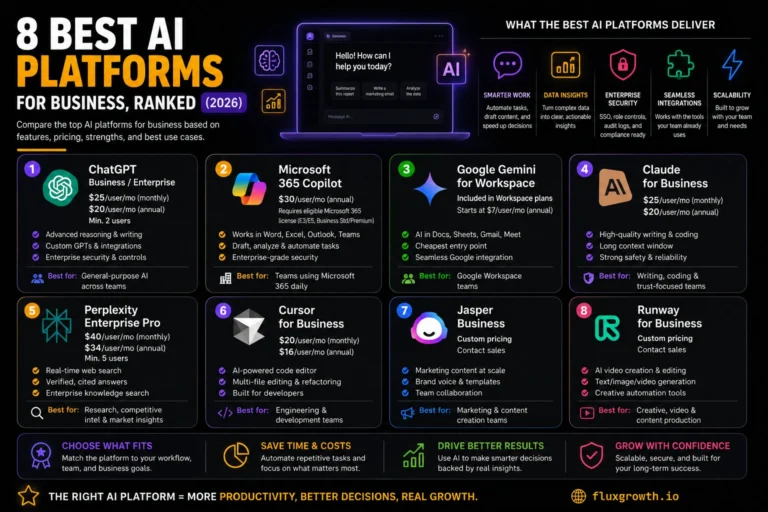
4. ChatGPT
The Swiss Army knife. Not built for dropshipping, but it’ll draft descriptions, brainstorm angles, write email flows, and rough out FAQ pages on demand.
Key features: Long-form and short-form writing, image generation (DALL·E), web browsing, and custom GPTs you can train on your brand voice.
Pros and cons: Cheap, flexible, and great for first drafts and ideation. But it has no idea what’s trending in your niche, and raw output reads generically you’ll edit every description before it’s store-ready.
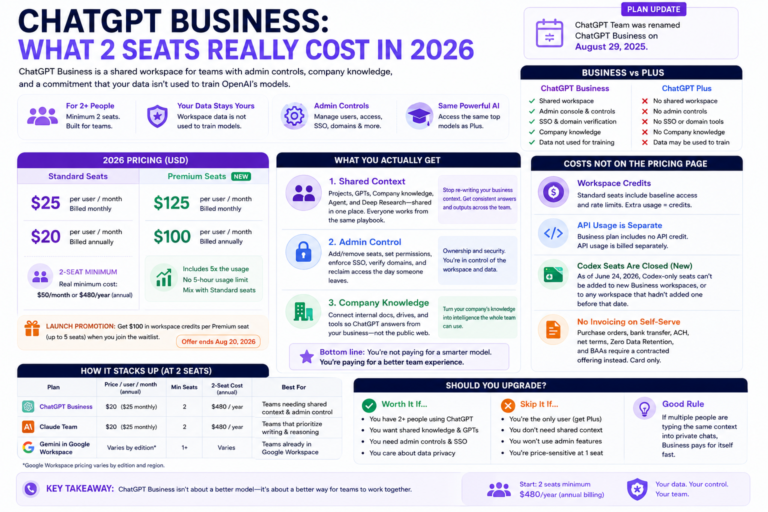
Pricing: Plus is $20/month. OpenAI also added a cheaper “Go” entry tier, and a $200/month Pro plan for heavy users.
Best for: Solo sellers who want one affordable assistant for writing and ideation across the whole store.
5. Claude
Anthropic’s assistant, and the one most professional writers reach for when tone matters. For product copy and brand voice, the output usually needs less cleanup than the alternatives.
Key features: Strong long-form writing and editing, large document handling, and natural prose that’s easier to match to a brand voice. Claude Pro also bundles Claude Code at no extra cost handy if you ever touch your store’s theme.
Pros and cons: Excellent for descriptions and email copy that don’t sound like a robot wrote them. The trade-off: no built-in image generation, so it won’t make your ad creative.
Pricing: Pro is $20/month (about $17 with annual billing); a free tier exists with daily caps, and Max tiers run $100 and $200/month.
Best for: Sellers who care about copy quality and want descriptions that read like a person wrote them.
6. Jasper
A marketing-team writing platform with templates for ads, landing pages, and product descriptions, plus a brand-voice feature that keeps everything consistent.
Key features: Brand Voice, 50+ copy templates, a Chrome extension, and a campaign-style workflow built for teams.
Pros and cons: The brand-voice consistency is genuinely good for multi-product stores. Two real downsides: it’s priced per seat (so a small team adds up fast), and there’s a documented pattern of charges continuing after cancellation CheckThat.ai’s 2026 review notes complaints of billing 30 to 180+ days later. Cancel through your bank if support stalls.
Pricing: Creator around $49/month and Pro around $69/month (per seat), with a 7-day trial and a custom Business tier.
Best for: Small marketing teams running several brands who need consistent copy at volume overkill for a one-product solo store.
7. AdCreative.ai
A creative-generation engine trained on real ad-performance data. Feed it a product and it spits out banners, social ads, and product shots fast.
Key features: AI ad and banner generation, brand guidelines per business, creative scoring, and stock photo access.
Pros and cons: It’s quick and the creative-scoring feature helps you pick winners before spending. But the pricing is sneaky, the entry plan is essentially image-only, and video ads are locked behind a $249/month tier, a 6x jump (per Superscale’s 2026 comparison). Credits also burn on download, not generation, so plan your monthly volume.
Pricing: Starts around $39/month for the entry tier (credit-based, ~10 credits), scaling to $249 and beyond for video and agency volume; 7-day trial.
Best for: Sellers spending on paid social media who need a steady stream of static ad variations and don’t need video yet.
8. Shopify Magic
If you’re on Shopify, you’re already paying for this so use it before buying anything else. Magic is the AI baked across your admin, and Sidekick is the chat assistant that can take actions for you.
Key features: Product description generation, email subject lines, AI image editing, blog drafts, and a Sidekick assistant that answers data questions and runs store tasks by chat.
Pros and cons: It’s free on every Shopify plan with no usage limits, and the descriptions come out about 85–90% of the way there for straightforward products. The limits show on complex or premium products, where the copy goes flat and needs a real human pass.
Pricing: Free on all Shopify plans (Basic and up). No premium tier, no per-generation charge.
Best for: Every Shopify merchant. Seriously squeeze this dry before you pay for a third-party writer.
9. Predis.ai
A social-content machine built with ecommerce in mind. It turns product data into posts, carousels, and short videos, then schedules them across platforms.
Key features: AI post and carousel generation, text-to-video, AI product photoshoots, competitor analysis, and multi-platform scheduling with a strong Shopify pull.
Pros and cons: The Shopify integration makes on-brand social content fast, and the free tier lets you trial it. But the output can feel formulaic, the interface looks dated, and longer videos quietly eat extra credits.
Pricing: Free plan, Core around $32/month, Rise around $79/month, and an Enterprise tier near $249/month.
Best for: Solo sellers and small teams who need consistent social posts and quick ad creative without hiring a content person.
10. Copy.ai
A copywriting and go-to-market tool that’s shifted toward workflows chains that research, write, and repurpose content in one run.
Key features: Unlimited chat words on paid plans, a workflow builder, brand voice, and access to multiple underlying models.
Pros and cons: The free tier (2,000 words) is a fair way to test it, and the workflows are useful once you’ve built them. The downside: it leans more general-marketing than dropshipping-specific, so you’ll do the niche thinking yourself.
Pricing: Free plan with 2,000 words, then a Starter tier around $49/month, scaling up for teams and heavier automation.
Best for: Sellers who want repeatable content workflows and don’t mind setting them up once.
Best AI Tool by Task (Quick Pick)

Skip to your bottleneck:
- Product research: Mine (ad-spy) or Sell The Trend (all-in-one)
- Product descriptions: Shopify Magic (free) or Claude (best tone)
- Ad creative: AdCreative.ai (static) or Predis.ai (social video)
- Customer support: Sidekick inside Shopify, backed by a human for disputes
- Social media: Predis.ai for volume, ChatGPT for captions and ideas
AI Dropshipping Tools Comparison Table

| Tool | Best for | Starting price (June 2026) | Free tier? | Standout |
| Sell The Trend | All-in-one research + fulfillment | ~$39.97/mo | Trial only | Store intelligence view |
| AutoDS | Backend automation | ~$26.90/mo | $1 trial | Auto fulfillment |
| Minea | Ad spying | ~$49/mo | Yes (200 credits) | 5-platform ad data |
| ChatGPT | General writing | $20/mo | Yes | Flexible + image gen |
| Claude | Brand-voice copy | $20/mo | Yes | Natural prose |
| Jasper | Team copywriting | ~$49/mo | Trial only | Brand Voice |
| AdCreative.ai | Static ad creative | ~$39/mo | Trial only | Creative scoring |
| Shopify Magic | Shopify-native AI | Free | Included | Sidekick assistant |
| Predis.ai | Social content | ~$32/mo | Yes | Text-to-video |
| Copy.ai | Content workflows | ~$49/mo | Yes (2,000 words) | Workflow builder |
Prices verified June 2026. Tiers change often — confirm on each tool’s pricing page before subscribing.
Free vs Paid AI Tools for Dropshipping

Free tools get you further than you’d think. Shopify Magic alone covers descriptions, emails, and basic support at zero cost. Stack on Copy.ai’s free words, Minea’s 200 starter credits, and ChatGPT’s free tier, and a brand-new seller can validate a product without spending on software at all.
So when does paid pay off? When a tool moves a number you can measure. Minea’s $49/month earns its keep the moment it saves you from one $300 losing ad test. AutoDS justifies itself when manual price-tracking across 200 products stops being humanly possible. The math is simple: if a subscription saves more hours or ad dollars than it costs, keep it. If you can’t point to the number it moves, cancel it within 30 days.
The honest answer on ROI? Free wins for your first store. Paid wins once you have sales data worth acting on. Most sellers flip that order and pay too early.
5 Mistakes That Burn Money
Trusting AI product picks blindly. A tool flagging a product as “trending” means other people are selling it, not that you can. Demand without a margin or a differentiator is just a crowded race to the bottom.
Skipping validation. AI finds the product; it doesn’t order a sample or check the supplier’s real shipping times. Dropshipping return rates run 5–8% (per ZIK Analytics’ 2026 data), and a product that looks great on a dashboard can fall apart in a customer’s hands.
Over-automating support. Let a bot handle “where’s my order,” sure. But route refunds, damage claims, and angry customers to a human automated dispute responses are a fast way to lose a chargeback and a customer in one move.
Publishing generic AI copy. A description that reads like every other store’s description doesn’t convert. Use the AI draft as a starting line, then add the specific detail only you know the texture, the fit, the one use case your customer actually cares about.
Ignoring trial-to-annual traps. This one’s quiet and expensive. AutoDS’s $1 trial, AdCreative’s download-based credits, Jasper’s post-cancellation billing every one of them can cost you real money if you don’t read the terms. Set cancellation reminders the day you sign up.
What I’d Do If I Were Starting Today
If I were launching a store this week, I’d resist the urge to subscribe to anything for the first 30 days.
I’d start with the free stack: Shopify Magic for descriptions and emails, ChatGPT or Claude for the writing Magic can’t handle, and Minea’s free credits to spy on what’s already selling. That’s enough to validate a product and make my first sales without a single paid tool.
Once I had real data, actual orders, an ad account that’s spending I’d add exactly one paid tool for my biggest bottleneck. Drowning in manual fulfillment? AutoDS. Burning ad budget on bad creative? AdCreative.ai or Predis.ai. Can’t find products that convert? Minea’s paid tier. One tool, one problem, measured for 30 days before I add a second.
Frequently Asked Questions
What are the best AI tools for dropshipping?
For most sellers in 2026, the strongest picks are Sell The Trend (all-in-one research and fulfillment), Minea (ad spying), AutoDS (backend automation), and Shopify Magic (free, Shopify-native). The “best” one depends on your bottleneck, not a ranking.
Can AI automate a dropshipping business?
It can automate large chunks product imports, pricing, fulfillment, content, and first-line support. It can’t pick your niche, vet suppliers, or handle complex customer disputes. AI runs the repetitive layer so you can focus on traffic and strategy.
Which AI tool is best for product research?
Mine if you want multi-platform ad data and competitor spying; Sell The Trend if you want research bundled with import and fulfillment. Both let you see what’s already selling before you spend on ads.
Are AI dropshipping tools free?
Some are. Shopify Magic is free on every Shopify plan, and Copy.ai, Minea, ChatGPT, and Predis.ai all offer free tiers. You can validate a first product spending nothing on software.
Can AI create product descriptions?
Yes, Shopify Magic, Claude, ChatGPT, and Jasper all generate them in seconds. Expect to edit the output, though; raw AI copy reads generic, and a quick human pass is what makes it convert.
Which AI tool is best for Shopify stores?
Start with Shopify Magic and Sidekick since they’re built in and free. Add Predis.ai or Sell The Trend, both of which integrate directly with Shopify, once you need more.
How can AI help increase dropshipping sales?
By finding proven products faster, testing more ad angles cheaply, writing copy that converts, and freeing your time for the things AI can’t do sourcing, branding, and customer experience.
The One Thing to Remember
The winning sellers in 2026 aren’t the ones with the most AI tools for dropshipping. They’re the ones who picked the right tool for their real bottleneck, measured it, and cut everything else. Start free, add one paid tool when the data tells you to, and cancel anything that can’t show you the number it moved.